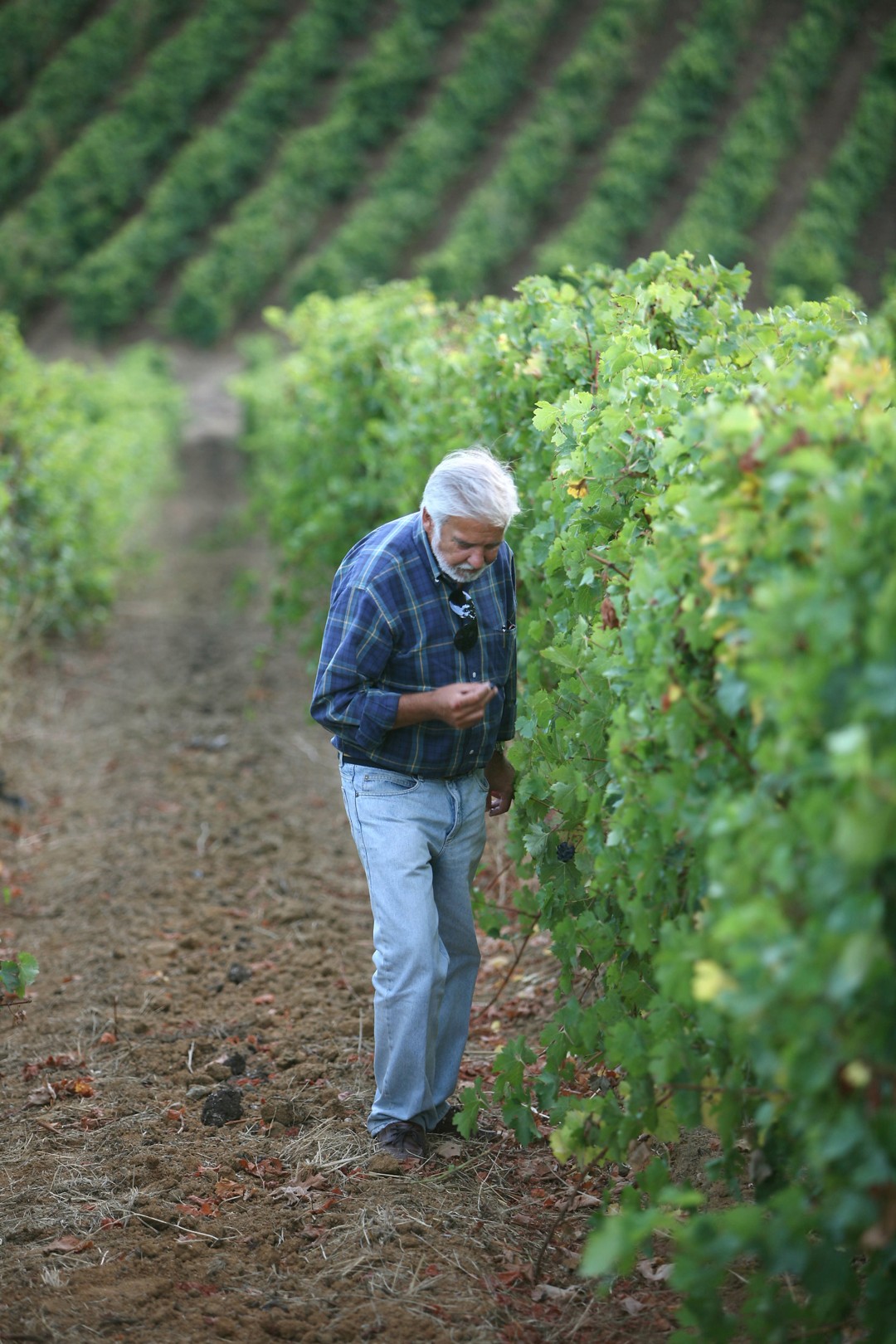
THE WINEMAKER JOSÉ NEIVA CORREIA
Born and raised on a wine and vineyard estate that many historians deem one of the longest established in the council of Alenquer and whose origins stretch back prior to the founding of the nation of Portugal - the Quinta de Porto Franco. It is from the excellence of this estate that José Neiva Correia, now 59 years of age and one of the most productive winemakers in the country, sources much of the raw material put into producing the very best DFJ Vinhos wines. This was the company he launched over a decade ago and that has now reached an average annual production level of six million bottles, across 33 brands and 77 different wines deriving from all mainland Portuguese regions, from the Douro down to the Algarve, except the Vinhos Verdes region.
Descending from generations dedicated to the art of viniculture, both on his father's and his mother's sides, José Neiva Correia followed in his family's traditions not only out of preference but also with thorough professionalism. Those who know and work with him make regular mention of his creativity and the enthusiasm that goes into each of his many and sharply differing wines with their blend of improbable grape varieties and surprising results. Whether top of the range, high priced and produced in restricted quantities or in mass volumes designed to meet the needs of the major international markets, the demand for quality in the final product never wavers whatever the circumstances. His knowledge is extensive and underpins everything he does.
As a winemaker, he has played a pioneering role both in the introduction of new varieties in Portugal and in promoting healthy agricultural practices.
Furthermore, he has contributed towards solutions found for the major problems facing the wine sector such as the appropriate sealing of wine bottle corks. Rigorous and keen on investigation, he has developed and patented a method for disinfecting the corks using ozone that has since been sold onto Grupo Amorim. This has helped in reducing the level of undesirable TCA (the Trichloroanisol compound causing the "musty smell"), a great threat to wine making.
As the sixth of eight children, José Neiva Correia still remains owner, in partnership with his brothers and sisters, of Rui Abreu Correia, Herdeiros, one of the largest agricultural holdings in Estremadura that tends, among other crops, 200 hectares of vineyards located across the councils of Alenquer and Torres Vedras.
QUINTA DE PORTO FRANCO - A historical estate
A long avenue of platens leads up to the main entrance way to Porto Franco, a low and long building with the traditional profile of agricultural residences in Alenquer.
The property has been in the family since his great grandfather purchased it from the Viscount of Chanceleiros, peer of the Kingdom, Civil Governor of Lisbon and Minister of Public Works under King Luís. A historic figure in Portuguese viticulture, Sebastião José de Carvalho, the first Viscount of Chanceleiros, founded his reputation not only on the introduction of innovative agricultural techniques but also for replanting with American vines following the decimation caused by phylloxera.
Some two centuries later, Porto Franco has become the central operational focal point for a core of properties either acquired or inherited by his father and now belonging to Rui Abreu Correia, Herdeiros.
Across the lands surrounding the patios adjoining the house there are streaks of colours enlivening the landscape: Alfrocheiro on one side, Moscatel on the other, the new Alicante Bouschet vine a little further on and to the left, Syrah, a wine that yielded 14 tons per hectare immediately in its second year of planting.
Indeed, a constant concern of José Neiva Correia has been to achieve higher yields from his vines without ever undermining the quality of the grapes. In actual fact and similar to what has been achieved in Australia, one of the largest wine exporters that carved out its market segment with quality new wines at low prices, this winemaker has sought to accelerate the productive lifecycle of the vines so as to attain the competitiveness able to bring about the best quality at the lowest price. Take the case of the ten hectares of Caladoc, a variety he introduced into Portugal and which derives from crossbreeding Grenache and Malbec, first planted in spring of 2007, the plantation is now up and producing whereas the average time expected would be between three and five years. Simply taste any of the Grand´Arte Caladoc, DFJ Caladoc & Alicante Bouschet, Alta Corte and Paxis Estremadura wines to understand the extent of the success of the many José Neiva Correia experiments.
Nevertheless, there are many more. On the 200 hectares of totally reconverted vineyards, where there is not a single old vine, José Neiva, trusting in his innovative capacities, introduced new varieties some of which were then considered unthinkable for the region. However, they have now materialized and underlie the renown of various varieties and bi-varieties representing the DFJ Vinhos brand. To list just a couple of examples, take the Grand´Arte Alvarinho, produced outside the Vinho Verde demarcated region, or Grand´Arte Pinot Noir, a French variety that is difficult to grow but responsible for practically mythical wines such as the Grand Cru Romanée Conti. Then there is Merlot, a unique variety in Châteaux Petrus, and also unprecedented across the lands of Alenquer and which resulted in the highly appreciated Grand´Arte Merlot and DFJ Tinta Roriz & Merlot.
A little further on, on the other side of the house, there are the former wine cellars still bearing the 18th century Lobo Garcez Palha family coat of arms. They are now restored and renovated to the modernist standards: the tanks are in fibre glass and epoxy, the covers and mouths substituted by stainless steel and vacuum filters for the whites and reds ensure musts are free of suspended solids. Just half an hour separates the picking of the grapes, an entirely mechanized process, and their arrival at the facilities to begin deseeding, crushing and the subsequent wine making process.
Only on the small vineyards given over to grapes for the top end Francos and Francos Reserva wines is harvesting by hand so that each bunch is carefully selected.
QUINTA DA FONTE BELA - Tradition on a grand scale
An agricultural engineer by training, José Neiva Correia launched his career with an internship at the National Centre of Viniculture Studies before later periods of study in Bordeaux, France and Gasenheim, Germany.
By 1998, he had already established his reputation as a renowned winemaker in Portugal working as a consultant to various companies and including D&F Wine Shippers, then the largest importer of Portuguese wines to the United Kingdom market, which he was later to join. Thus, to the "D" of Dino Ventura and the "F" of Fausto Ferraz there was joined the "J" of José and thus DFJ Vinhos was founded. Subsequently, in 2005, he became sole owner following the death of one partner and the decision to take over the entirety of the company.
With its headquarters between Vale de Santarém and Valada, around half an hour from Lisbon, DFJ Vinhos holds what was one of the most celebrated and extensive properties in southern Portugal, the Quinta da Fonte Bela estate.A series of imposing and sturdy constructions with an outline unique to the region, French châteaux architecture and featuring Marseille style roofing, blends with influences from industrial architecture, for example, the impressive distillery chimney that can be made out from kilometres away.
It was here that António Francisco Ribeiro Ferreira, one of the great estate owners of the country, in the late 19th century produced grape spirit that was then incorporated into the port making process.
Step by step, José Neiva Correia has set about restoring the various estate properties, nine pavilions in total (with a total covered area of about 8,000 m2). This includes warehouses, a distillery and a huge wine cellar over 20 metres in height and vats with a 2.5 million litre capacity in addition to another wooden vat cellar, currently not operational but considered the largest in Portugal and now in use for the storage of wine in half-casks and French, American and Portuguese oak. That all comes in conjunction with a coopers where barrels are restored and repaired, the laboratory for testing and controlling company produced wines in addition to the bottling plant with a 3,000 per hour capacity.
DFJ VINHOS - A decade of prospering
In 2008, ten years on from its foundation, DFJ Vinhos is proud of how far it has come: the Portuguese company holding one of the largest shares of the British market, equivalent to the export of one and a half million bottles annually. In just these few short years, the company has had a global impact in an increasingly competitive sector and now exports some 90% of its production, representing some 5.4 million bottles, the overwhelming majority targeting the medium segment with a highly competitive pricing strategy.
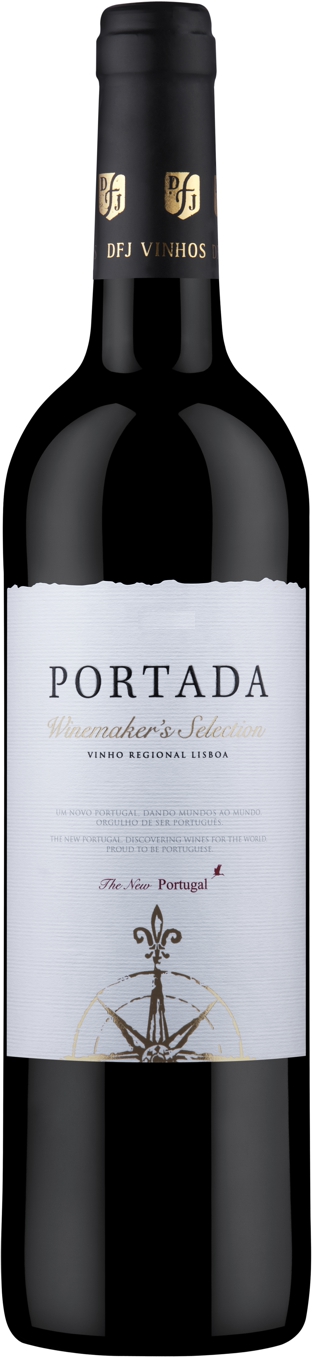
The Estremadura regional Ramada, a brand in the meantime disposed of, was market leader in the United Kingdom while other reds from the same region, such as Portada, Coreto and Manta Preta, are already benchmarks in the Scandinavian markets and accounting for 15% of the exported volume. Canadian state monopolies represent the destination for a further 10% of total Estremadura and Terras do Sado regional wine exports. In addition, and on a smaller scale, DFJ is also present in the United States, Russia, India and Brazil as well as a range of countries from across the five continents: in the European Union, Germany, Austria, Belgium, Spain, France, the Netherlands, Ireland, Italy and Luxemburg and further eastwards in Poland, the Czech Republic, Slovakia, Bulgaria, in Africa, São Tomé e Príncipe, Angola and Mozambique, down under in Australia and New Zealand with Asian countries including China, Japan, Singapore and Thailand. Internationalisation, volume and diversification of the product range, excluding only Vinhos Verdes and fortified wines, are the guiding principles for a company with the priority objective of obtaining the best quality/price relationship for each of its products so as to best ensure client satisfaction.
This strategy has already brought benefits judging not only from the growing profile achieved in different world markets as well as that of Portugal but also the many awards, particularly internationally with over 80 prizes won at the International Wine Challenge (IWC), including two Red Wine of the Year awards.
Oddly, and despite the scale of its annual average production - six million bottles -, DFJ does not run vineyards but only makes the wine. To this end, it sources its raw materials through partnerships established with various vineyards across the country among which is the Neiva Correia family company. Coreto and Portada - the two lowest priced wines - make up 20% of total company production. Finally, the extensive portfolio is supplemented by the rosés - Pink Elephant, Coreto, Casa do Lago and Grand´Arte - "increasingly in fashion" and with an upper market positioning, there are the fine quality whites and reds: Grand´Arte and the DOCs of Alenquer, Ribatejo and the Douro in addition to the Icon range Consensus and Francos Reserva.
Then there is also the Quinta do Rocio red, an unprecedented project brought about by a partnership between DFJ Vinhos and Tomás Sanches da Gama, owner of one of the most beautiful and finest estates in Alenquer and which adjoins the Quinta de Porto Franco. The Rocio lands are also a historical estate of excellence given that it was here that the famous wine maker the Viscount of Chanceleiros was born and raised. The planting of the first vines can be traced back to 1503 when Pedro Álvares Cabral acquired the property. Since then, the estate has been passed down between various families and circumstances through to 1939 when it was purchased by Tomás Sanches da Gama, the father of the current similarly named owner who inherited it at the age of 17. Launched in 2007, the first Quinta do Rocio (meaning dew) harvest resulted in an unusual blend of the Syrah, Merlot, Touriga Nacional and Grenache varieties and signed by both José Neiva Correia and Lisete Lucas.
OENOLOGY & INNOVATION
Along with the careful selection of the varieties to be planted across the various Rui Abreu Correia, Herdeiros landholdings, José Neiva Correia ensures the highest standards of agricultural practices with no role for chemically treating the soils. Instead, recourse is made to organic material of the highest quality and for the most appropriate grafting approach dependent on the lands, castes, clones and the respective intended wine.
Recently this winemaker carried out another experiment that again demonstrated his continued enthusiasm and innovative spirit that have long been the hallmark of his career. In the council of Torres Vedras, he planted one and a half hectares with Dorn Felder, a German grape variety all but unknown in Portugal or to the wider public. Nevertheless, it matures early and, highly resistant to the effects of the Atlantic, produced a brightly coloured and highly fruity wine much to prevailing consumer tastes. The results have been so satisfactory that there are already plans to launch a new wine just as soon as regulatory approval allows. We may only patiently await that future tasting.
QUINTA DO ROCIO
Quinta do Rocio red, was an unprecedented project brought about by a partnership between DFJ Vinhos and Tomás Sanches da Gama, owner of one of the most beautiful and finest estates in Alenquer and which adjoins the Quinta de Porto Franco.
The Rocio lands, near Alenquer at 50 km north Lisbon, are also a historical estate of excellence given that it was here that the famous winemaker the Viscount of Chanceleiros was born and raised. Sebastião José de Carvalho the 1st Viscount of Chanceleiros won the fight against the Filoxera by planting American root vines in Portugal in the end of the XIX century.
The planting of the first vines in the property can be traced back to 1503 when Pedro Álvares Cabral (recently returned to discover the navigation route to Brazil) acquired the property.
Since then, the estate has been passed down between various families and circumstances through to 1939 when it was purchased by Tomás Sanches da Gama, the father of the current similarly named owner who inherited it at the age of 17.
Quinta do Rocio (Rocio means dew) has 15 ha of vineyards where are produced Syrah, Merlot, Touriga Nacional and Grenache grape varieties. Quinta do Rocio has also laboratory and the old "Adega" cellar from the Visconde de Chanceleiros times, now totally renewed. The Cellar has capacity for 350000 litre.
The Quinta do Rocio wines have the signature of José Neiva Correia and Mrs. Lisete Lucas who accepted the challenge of Mr. Tomás Sanches da Gama:
"To produce, from an historic terroir and of great quality, a wine which the philosophy reflect the modern interpretation of the tradition."
QUINTA DO ROCIO 2006
Presented to the journalists in the Quinta do Rocio the 6th de December 2007, being produced 5786 bottles from the unusual blend of Shiraz, Merlot, Touriga Nacional and Grenache grape varieties (each one 25%), ageing 9 months in new Seguin-Moreau French oak barrels, and 12 months in bottle before going to the consumer.
To know more about the Quinta do Rocio 2006 follow this link:
http://www.dfjvinhos.com/en/page/vinhos/segmento/132/
QUINTA DO ROCIO 2007
Presented to the journalists in Lisbon at York House the 7th September 2009, being produced 6974 bottles of the same blend of Shiraz, Merlot, Touriga Nacional and Grenache grape varieties (each one 25%), ageing 12 months in new Seguin-Moreau French oak barrels and 12 months in bottle before going to the consumer.
To know more about the Quinta do Rocio 2007 follow this link:
http://www.dfjvinhos.com/pt/page/vinhos/segmento/60